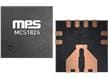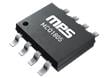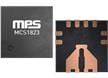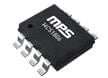





MCS1823GQTE-350BRN-P

Monolithic Power Systems (MPS)
946-S1823GQTE350BRNP
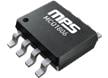
MCS1823GQTE-350BRN-P

Mfr.:

Description:
Board Mount Current Sensors Ultra-Small Package, Linear Hall-EffectCurrent Sensor with Overcurrent Detection

ECAD Model:
Download the free Library Loader to convert this file for your ECAD Tool. Learn more about the ECAD Model.

In Stock: 625

Stock:
625
Can Dispatch Immediately
On Order:
500
Factory Lead Time:
26
Weeks Estimated factory production time for quantities greater than shown.
Minimum: 1   Multiples: 1
Unit Price:
-,-- €
Ext. Price:
-,-- €
Est. Tariff:

Pricing (EUR)

Qty. Unit Price
Ext. Price
2,16 € 2,16 €
1,93 € 9,65 €
1,73 € 17,30 €
1,66 € 83,00 €
1,59 € 159,00 €
Full Reel (Order in multiples of 500)
1,45 € 725,00 €
1,37 € 1.370,00 €
1,32 € 2.640,00 €
1,28 € 6.400,00 €

Product Attribute Attribute Value Select Attribute
Monolithic Power Systems (MPS)
Product Category: Board Mount Current Sensors
RoHS:  
50 A
Current Sense
4 us
2.5 %
120 kHz
3.3 V
Ratiometric
Brand: Monolithic Power Systems (MPS)
Country of Assembly: Not Available
Country of Diffusion: Not Available
Country of Origin: CN
Height: 0.7 mm
Length: 3 mm
Maximum Operating Temperature: + 125 C
Minimum Operating Temperature: - 40 C
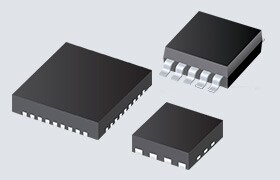
Package/Case: TQFN-12
Packaging: Reel
Packaging: Cut Tape
Product Type: Board Mount Current Sensors
Factory Pack Quantity: 500
Subcategory: Sensors
Supply Voltage - Max: 3.6 V
Supply Voltage - Min: 3 V
Type: Linear Hall-Effect
Width: 3 mm
Products found:
To show similar products, select at least one checkbox
Select at least one checkbox above to show similar products in this category.
Attributes selected: 0

USHTS:
8542390090
MXHTS:
8542399999
ECCN:
EAR99

MCS1823 Linear Hall-Effect Current Sensors

Monolithic Power Systems (MPS) MCS1823 Linear Hall-Effect Current Sensors feature a differential Hall array that cancels stray magnetic fields. The primary conductor's low resistance (0.6mΩ) allows large currents to flow near high-accuracy Hall sensors in the IC. These MPS MCS1823 sensors detect the magnetic field generated by the current at two points. The difference in the magnetic field between these points is converted into a voltage proportional to the current. A spinning current technique ensures a low and stable offset.